Friday, June 14, 2019

June Content Workshop 2019


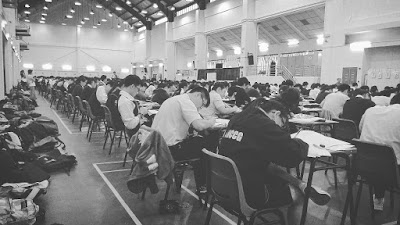
Having concluded the 2-day content workshop, I have deep appreciation for my students who came early to help and stayed back to clear up.

The first day, we worked through key information pertaining to our world,  setting the context for our world now. Thereafter, we delved into the exceptional miracle that is Singapore.

After that we went through various topics, clarified key concepts and discussed recent events, exploring the nuances and issues embedded within.

At the end of two days, it is with much delight and contentment that we celebrated, albeit wistfully, the end of this little journey into the quirks that make our world.

As with tradition, we ended the workshop with a cake. A rainbow cake that symbolises the rainbow that peeks out after a dreary journey, giving hope and joy to those who chose to embark on this journey of exploration.

"Knowledge is power. Look at how much you have learnt. Be confident. You can do it!"


Monday, March 25, 2019

Brand new beginnings; same old me

Since 2019 February, we've shifted The Bell from Redhouse to our new office at North Bridge Centre. One of the reasons being that Tai is now growing up, and he probably will want some private space at home... away from his mummy's helicopter parenting 😈😈 #noapologies

The new space feels somewhat different from the Redhouse - things are... neater... and more... organised 😅 Ivan said it was definitely more conducive for studying; in any case, I suppose I can always prettify the place when he's not looking #noapologies

We don't have any photos of the new place yet; been busy with classes and Tai's shooting competitions. Also, we're trying out Ezbuy for the first time, and the shipping is taking ages 😒 Once the place is done, I will definitely post some photos here! In the meantime, here're the posters for the 2019 June GP Content Workshop...


Monday, December 24, 2018

Merry Christmas and (we're all looking forward to a very) Happy New Year!


Merry Christmas and (we're all looking forward to a very) Happy New Year!


Through the years, we have been blessed with unyielding support and trust. We are both thankful and grateful for the parents and students who have journeyed with us. You have been our fuel and drive, motivating us to keep our beliefs and continue our path to help students.


2019 is going to be an exciting year for many reasons... One of which is a secret project we've been working on for the past three years - phase 1 will soon be coming to fruition! Stay tuned for updates! 😊


Thursday, November 08, 2018

Nope... I won't be publishing the 2018 GP paper any time soon...

Image from personal collection

Out of professional courtesy, I will not be publishing the 2018 papers any time soon. Many schools are liable to "embargo" this paper for use in 2019. If you're a parent, and would like to find out about the paper, do drop me an email and I'll see how I can best address your queries.

If you're a student, GP IS OVER. GO STUDY YOUR OTHER SUBJECTS.

That said, this year's paper is a doozy. In P1, some of the topics were interesting, to say the least, and I'm over the moon with Q8 because many people have been telling me that this topic will never appear - I mean, there's nothing in the syllabus that dictates what will or will not be tested. As long as the pedagogy is sound, the lesson objectives are aligned and clear, there really isn't anything that we cannot discover and learn in a GP class.

I cringed a little when I saw P2 - my students know it's not my favourite topic 😅 - but having said that, the paper itself is definitely do-able as long as you take a deep breath and read the question properly. The phrasing of the AQ was a little sneaky, but hey, it IS English, and this IS a legit question to pose. Besides, this phrasing makes the overarching topic a little bit more relatable and focussed.

Okay, I've said a lot already... 😁 Over the December holidays, I'll probably be reviewing the materials I have used in 2018, and will be refreshing the content, ready for 2019!

To my dearest students, and everyone else who's taking the A levels: Hang in there, you got this! 😊  (And don't skip your meals!)

Thursday, November 01, 2018

To you, with love

Image from personal collection


It is time. 

Your pre-university journey is coming to an end. We are now at the cusp of the home stretch. All that you have done through these years has been for this. At this most critical time, keep strong, and put one foot after the other (or write one word after another).

Remember: You have learned all the skills you needed.

You have completed so many practices. You have gained so much knowledge through your JC journey. And your training, for now, has come to an end. The exam and the rest of your life lies ahead. The skills, knowledge, and confidence are your tools in your kit, at your disposal to help you navigate through this exam, and later in life.

So stay calm and confident as the curtain is about to be raised. The first act is General Paper. The subject we have been training for. Keep your mind clear and focussed on the question, craft your response, and weave in some of the innumerable examples we have discussed over the years.


The examination is your time to shine.


To my beloved students, to everyone taking the A levels, I wish you all the best as you embark on the next phase in your life. Jiayou!!

~ Ms. Belinda, Nov 2018 ~


Evaluate the claim that a country’s well-being is dependent on its economic development.

Image by Neville Wootton, licensed under Creative Commons.


Evaluate the claim that a country’s well-being is dependent on its economic development.

The first female Thai Prime Minister, Yingluck Shinawatra, was ousted from power primarily on the argument that she would irrevocably compromise the future of the nation by taking on too much debt in the funding of her pet project – a high speed rail that connects parts of Thailand and even neighbouring countries. If indeed pulled off, this could have sparked tremendous economic development in the vast nation, currently segregated by chasms in wealth and opportunity. However, the Yellow Shirts faction argue that this project would instead hinder economic development, since the nation would be buried under crippling debt. Whichever side of the argument, what is apparent is the unanimous assumption that the nation’s well-being is dependent on its economic development; what differs is the strategy to achieve said development. This, however, relies on a simplistic view of the term “country’s well-being” as it opines that well-being is primarily material. Should we acknowledge that well-being of a nation necessarily comprises fewer tangible criteria, then it is clear that economic development often leads to well-being for a nation, but admittedly can hardly promise it.

The main reason why most would instinctively agree that economic development is fundamental to a nation’s well-being is the fact that our capitalist world necessitates financial ability to provide the material needs for a nation. Beyond merely catering to immediate needs, economic development in the form of long-term strategy and policies, can go a long way in ensuring sustainability and continued self-sufficiency. In the case of Nauru, an island-nation once abundant with phosphate deposits, the lack of economic development beyond mere mining and sales, arguably led the nation to its woeful state today, reliant on handouts and goodwill of Australia, and accepting the refugees Australia places in their nation. The problem is that Nauru is far from alone, with Kiribati and Venezuela failing to meet the needs of their people, arguably also because of their lack of economic development. Hence, it is painfully apparent that in our capitalist world, economic development is often an important element in ensuring the welfare of the nation. Admittedly, some nations like Cuba and Bhutan, have gotten by without much emphasis on economic development, eschewing traditional goals like increased Gross Domestic Product, in favour of welfare and happiness. While the manifestations of their goals are different, Cuba through clear social structure, and Bhutan through the emphasis on happiness, they have in their own ways sought to improve the nation’s well-being. It must be noted that while the main thrust of their efforts may not lie in the usual forms that economic development take, economic development still play a part, with Cuba becoming a more open economy and Bhutan opening itself up for tourism. They may not have been the most eager proponents of economic development as a means to ensure the well-being of the nation, they too incorporate it as part of the government’s arsenal, hence proving a nation’s well-being is dependent on economic development.

Another reason for this dependence is the fact that economic development is often taken as an indicator of a capable government, a trait that is needed for the nation to have a voice on international platforms. As the Chancellor of Germany, a nation with laudable economic health and system, it is little wonder that Angela Merkel is the second most powerful person in the world. This same quality has allowed Singapore, a tiny island-nation, to have a loud voice on international matters. Evidently, sound economic policies and sustained development are essential in the reputation of nations and their leaders. The same clout then enables the nation’s welfare to be protected, without being subject to the generosity of those in power. Greece’s financial crisis rendered them vulnerable and at the mercy of Germany. While Greece sought a bailout, they were compelled to undergo the crippling experience of a complete breakdown of the system and entertain the possibility of austerity measures as condition for future assistance from its wealthier European counterparts. This makes it abundantly clear that economic development is needed to ensure a nation’s well-being.

That said, there is something absolutely noble about turning one’s back on economic matters and focussing on the intangibles instead. Beyond mere economic pursuit, once that has been achieved, the nation’s well-being would divorce from the material pursuits. This is when the Nordic countries seem to shine the way. Not known for rapid economic development nor productivity in the way that Asia has set the bar, countries like Norway, Finland, and Denmark illuminate the way forward for national welfare. Finland has on of the best education systems in the world, a trait that would have been exploited by innumerable other nations to boost economic growth, yet Finland channels its best people into education for long-term betterment. Not materially, but intangibly. Norway’s expenditure on criminals, even recalcitrant ones like Anders Breivik, could have gone a long way in boosting productivity or development, but Norway believes in being human and humane. These examples show that while a nation’s well-being is typically dependent on economic development, it may not be so for nations which have attained enough to meet its needs. For these privileged nations, their well-being then veers away from the pursuit of economic development, on to other areas that are often intangible, and with it, something to be truly proud of.

All in all, it is apparent that a nation’s well-being is largely dependent on economic development, whether past or present. The issue is not then the mandate to push for even more economic development, but to realise it is just a means to the end. True well-being is the freedom for governments to do what is best of the nation and people, without needing to fear that they will be ousted for it.


~~~~~~
All sample essays in this blog are original works written by Belinda. They are handwritten under timed conditions (90 minutes), and are subsequently typed out as blog posts. If you like what you read, leave us a comment below! :)

Monday, October 08, 2018

'Countries experiencing conflict should be left to sort out its own problems.' How far do you agree?

Image from Wikimedia Commons, licensed under Creative Commons.


'Countries experiencing conflict should be left to sort out its own problems.' How far do you agree?

Ex-President of Nigeria, Jonathan Goodluck, flatly refused to acknowledge the growing problem of the Boko Haram, at least officially. Rather than deal with the conflict consuming his already-troubled nation, he sought to fling wave after wave of his men, armed with just forty bullets each, to give the fractured segments he resolutely refused to acknowledge. His staunch refusal to sort out such evident escalations of disagreement has led to exacerbating tensions not just in his nation, but in and around the region. Unfortunately, Nigeria is far from alone in being incapable or unwilling to sort out its own problems, at least not in a manner deemed satisfactory to the powers that be in the world. Such distrust has led to cries for world powers to intervene in any domestic issue that potentially could escalate in conflict, justifying America's role as the de-facto World Police. Still, there are others who believe that countries have the ability to sort out their own problems and manage the conflict within their territories, with their nuanced knowledge of the issue, and facilitated by a lack of resistance to the interventions, as typical of external help. Having considered both sides of the issue, I must admit I am more for non-intervention, believing that countries experiencing conflict should be generally left to sort out its own problems.

Admittedly, there is some merit to the argument that such countries facing conflict should not be abandoned to their own devices since the conflict is often, in large part, due to a lack of ability or resources. This is indeed a fair point when we consider that the conflict is a testament to the inability for the initial disagreement to be resolved. Whether it is due to a lack of resources to meet the needs of the nation, or less tangible forms of inability, it does appear that patient optimism would likely prove insufficient in resolving the problems. King Mswati III of Swaziland has been turning a blind eye to the abject poverty that most of its people struggle with on a daily basis, while indulging his fifteen wives in luxuries and comfort. The growing resentment in the community is gaining attention, even if the monarch is determined to ignore it. Sadly, Swaziland is far from being alone, with Aung San Suu Kyi's conspicuous silence on the Rohingyas deafening, to say the least. Whether the conflict is borne of a lack of resources or ability, the severity that fuelled the escalation can indeed be said to justify intervention of some sort. At least, at first glance, it seems we are morally obliged to not leave the troubled to their own limited devices.

Armed with the perceived need for a foreign power with an arsenal of both resources and morality, we have embraced intervention, conveniently overlooking the vested interest of such measures. We have so often painted in our minds, images of countries in conflict as torn, broken souls incapable of survival, and the intervention as the arrival of justice and light to life the afflicted out of the miasma and darkness. Most of the time, we completely fail to consider the motivations of such assistance. In the rare occasion that we do, we defend it as fair reward for the supposed altruistic efforts. America's fervour in ensuring justice, somehow seeming to be confined to nations that have oil, is perhaps the clearest indication of such vested interest. Even if we dismiss this accusation, there are an abundance of other examples. Be it the generous assistance extended from Australia to Nauru, so as to solve its economic challenges, that has seen Nauru become the dumping ground for refugees turned away by Australia. Or the recent news of Filipino President Duterte rejecting millions and millions of financial aid offered by the United Nations for different problems and issues. All these cases reveal one undeniable truth: Assistance is rendered with vested interest. Even if it can mitigate issues in the short run, the implications, not to mention obligations, make the intervention or acceptance of it, rather imprudent.

To complicate matters, problems are not universal, couched in the unique context and mindset of its people. This hinders the effectiveness of intervention in other countries' problems. The reality is that we see the world from our own perspectives, so the assessment of the cause, and by extension the solution, is very much married to our perspectives. Our perspectives, again a product of our time, experiences, and social values. To then apply this lens to a society not our own is foolhardy at best. Without understanding the multitude of causes and the byzantine web of exacerbating factors, the simplistic imposition of a supposed panacea, with the naive arrogance accorded by privilege, will bring little of the reprieve we vainly seek. Our prideful ego, in seeking to bring advancement and improvement to perceived forgotten lands, can be found littered in the annals of history, thwarted by the savage, ungrateful creates unable to comprehend the gifts of modernity. From the futile attempts to educate women on menstrual hygiene, or merely seeking to eradicate the abhorrent practice of Chhaupadi - banishing women to secluded huts during their menstrual cycle - our efforts to solve problems and eliminate conflict are clearly thwarted by our lack of true understanding. Whether conflict stems from gender, cultural practices, race, religion, or whichever arbitrary division prevalent, intervention on the basis of wisdom, knowledge, or wealth, does little to resolve conflict, even if it might numb the extent somewhat.

What perhaps is the straw that breaks the camel's back is the pride involved in conflict resolution. This is particularly troubling since one country's problem can be construed as injurious to the image of the nation. To then have another nation coming to the rescue is likely to be far more than any self-respecting citizen can bear. After all, nationalistic pride would prevent one from accepting the superiority of another nation and its ways, especially at the implied rejection of one's own, or at least the acknowledgement of its inadequacies. From Castro's rebellious declaration that Cuba does not need "gifts from the Empire", to North Korea's persistent efforts to credit the Supreme Leader for the items sent by America, the insecurity and threat to sovereignty is plainly evident. Even in the face of rational reason, the acceptance of assistance from other nations is an admission of weakness and ineptitude. Moreover, this is assuming that the help was not already mired in a Gordian knot of terms and conditions, intended to impose the values and will of the party offering help. The European Union's offer to bail out bankrupt nations often included a requirement for austerity measures, at once a clear show of dominance and also a less than covert criticism on existing leadership. Such efforts, rationally sensible, provoke resentment and retaliation, further fracturing the communities already having difficulties.

With such clear limitations to intervention, it is logical for nations to be given the space to work through their issues. They have the clearest insight and knowledge; and whether they admit and acknowledge it is another matter.  The solutions, however juvenile or imperfect the rest of the world deems, is theirs and they can focus on tweaking it instead of being compelled to fervently defend it out of pride. Perhaps most poignant is the revelation that problems and conflicts are largely products of perception. The value-judgement and priorities already vary enough from individual to individual, without foreign input to complicate matters far more.

Now, it is not to say that foreign intervention has no place, but that the conditions must be thus urgent and severe enough to necessitate the actions, considering the implications and general futility. Thankfully, our pride does allow for the acceptance of help and intervention, at least when it is apparent that the refusal of which mean certain death and suffering in the immediate future. Typically triggered by natural catastrophes, the urgency and severity facilitate the expression and acceptance of humanity, without fear of the cynical self-interest that attaches itself to rational thought and plans. Wherever the catastrophe, the world rallies quickly, driven by the stark reminder of our own mortality, to help a fellow human being. We are cognisant that without assistance, irrevocable consequences are swift and cruel, spurring us to act as a collective bastion of humanity. Yet, in less urgent situations, we find ways to rationalise our way out of helping or accepting such help, however severe it may be.

In all, it is clear that countries experiencing conflict should generally be left to sort out its own problems, with its expertise and the futility of intervention, though it must be acknowledged that we should make an exception in cases of extreme urgency and severity. Whether the decision to not intervene is borne of acknowledgement of futility or trust in the community, this approach will at least reduce complications and divergence that lend itself to further disagreements. It takes a lot of faith to allow events to unfold themselves, the effort to resist intervention far greater than simply taking over. Let us not make the mistake of equating non-intervention with disinterest, but instead, choose to see it as the greatest expression of faith and confidence in the fellow humans in other nations. As much as we lambast Nigeria and their president, we should remember that the people had the wisdom to not re-elect President Goodluck. That should count for something.


~~~~~~

All sample essays in this blog are original works written by Belinda. They are handwritten under timed conditions (90 minutes), and are subsequently typed out as blog posts. If you like what you read, leave us a comment below! :)


What's New

June Content Workshop 2019

Having concluded the 2-day content workshop, I have deep appreciation for my students who came early to help and stayed back to clear u...

You Might Also Like...